

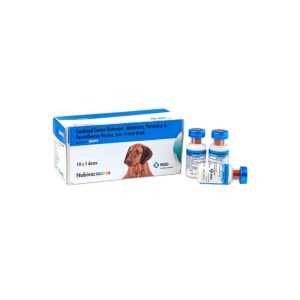


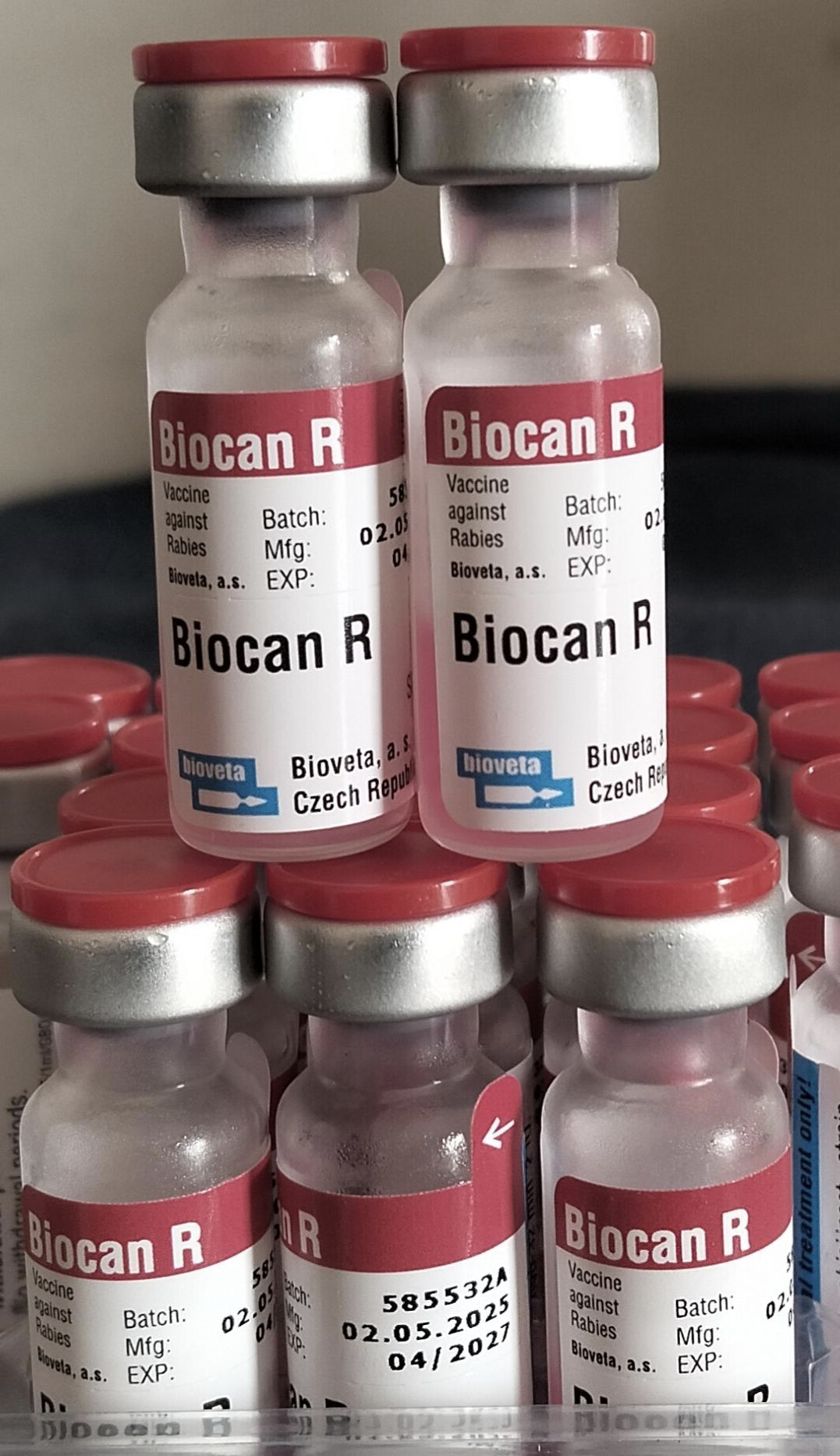
Description
Indications
The rabies vaccine is suitable for the prevention of immunity against rabies and the treatment of patients with suspected exposure to rabies.
- Pre-exposure immunization:
- Professional groups exposed to frequent contamination
- Veterinarians (including veterinary school students)
- Technicians working with veterinarians
- Laboratory personnel handling materials contaminated with rabies virus
- Slaughterhouse personnel and breeders
- Workers and naturalists in sexually affected areas
- Babies who are specifically exposed to the risk of rabies
- Immunization after exposure:
- Treatment of subjects bitten or suspected of being bitten by animals with rabies
- Treatment of contact subjects.
Pharmacology
When rabies immunoglobulin is given, it might cause immediate or delayed hypersensitivity responses. Hypotension, dyspnoea, and urticaria are the most common initial responses. Inflammatory responses, fever, pruritis, rash or urticaria, adenopathy, and arthralgia are examples of delayed reactions.
Dosage & Administration
To reconstitute the vaccine, transfer content of supplied diluent into the vial containing freeze-dried preparation. Do not shake. After reconstitution the solution should be homogeneous, clear and free from any particles. Vaccine must be injected immediately after reconstitution and the syringe should be destroyed after use.
Method of administration for intramuscular use: The 1ml dose of Rabies vaccine should be given intramuscularly in the deltoid in adults and in the anterolateral aspect of the thigh muscle in children under 1 year. It should not be injected into the gluteal region. Do not inject intravenously.
Method of administration for intradermal use: The 0.1 ml dose of Rabies vaccine (per site) should be administered intradenmally in the upper arm, over the deltoid.
Pre-exposure immunization: 1 ml for children and adults.
Primary-vaccination: According to the WHO recommendations 1 injection by the intramuscular route on days DO, D7, D21 or D28, followed by a booster dose one year later.
Boosters: Thereafter, one injection every 5 years or when the titre is found to be less than 0.5 lU/ml
Post-exposure immunization:
- Local treatment of the wound
- Vaccination of non-immunized subjects
Intramuscular schedules: One Intramuscular (IM) dose comprised of 1 ml.
Standard intramuscular (1-1-1-1-1) regimen:
- Day 0: 1 injection of 1 ml
- Day 3: 1 injection of 1 ml
- Day 7: 1 injection of 1 ml
- Day 14: 1 injection of 1 ml
- Day 28: 1 injection of 1 ml
Or
Abbreviated multisite (2-1-1) regimen:
- Day 0: 2 injections each of 1 ml at separate sites
- Day 7: 1 injection of 1 ml
- Day 21:1 injection of 1 ml
Intradermal schedules: One intradermal (ID) dose is comprised of 0.1 ml.
Thai Red Cross (2-2-2-0-1-1) schedule:
- Day 0: 2 injection each of 0.1 ml at separate sites
- Day 3: 2 injection each of 0.1 ml at separate sites
- Day 7: 2 injection each of 0.1 ml at separate sites
- Day 28: 1 injection of 0.1 ml Day 90:1 injection of 0.1 ml (optional).
Or
WHO Modified Thai Red Cross (2-2-2-0-2) schedule:
- Day 0: 2 injection each of 0.1 ml at separate sites
- Day 3: 2 injection each of 0.1 ml at separate sites
- Day 7: 2 injection each of 0.1 ml at separate sites
- Day 28: 2 injection each of 0.1 ml at separate sites
In case of severe (WHO category 3) wounds, rabies immunoglobulin should be administered as soon as possible with the first dose of rabies vaccine. The anti-rabies immunoglobulin should be used as local wound soakage injections as much as possible, with the rest part for muscle injection. The rabies vaccine should be administered in different injection site.
Vaccination of immunized subjects: If vaccine administered in less than 5 years of exposure (cell culture rabies vaccine): 2 injections one on each of DO, D3. If vaccine administered in more than 5 years of exposure or incomplete vaccination: 5 injections on DO, D3, D7, D14 and D28 with administration of immunoglobulin if required. Post-exposure vaccination must be administered on the basis of severity under medical supervision.
WHO guidelines on post-exposure treatment depending on wound severity-
Touching or feeding of animal, licks on intact skin:
- Recommended treatment: None, if reliable case history is available.
Nibbling of uncovered skin, minor scratches, superficial bites (except on head, neck, shoulder girdle.arms or hands) or abrasions without bleeding, licks on broken skin:
- Recommended treatment: Administer vaccine immediately on Day 0, D3, D7, D14 and D28.Stop treatment if animal remains healthy throughout the observation period of 10 days or if animal is killed humanely and found to be negative by appropriate laboratory techniques.
Single or multiple transdermal bites or scratches specially on head, neck, shoulder girdle,arms or hands. Contamination of mucus membrane with saliva (i.e. licks on broken skin):
- Recommended treatment: Administer rabies immunoglobulin immediately with the first dose of rabies vaccine. Administer rabies vaccine on Day 0, D3, D7, D14 and D28 or D90 (optional). Stop treatment if animal remains healthy throughout the observation period of 10 days or if animal is killed humanely and found to be negative by appropriate laboratory techniques
Administrations:
Prompt and gentle thorough washing with soap or detergent and flushing the wound with running tap water for at least 15 minutes.
After washing, disinfectants like either ethanol (700 ml/l) or tincture or aqueous solution of iodine or povidone iodine must be applied.
Don’t bandage or suture the wound.
Co-administration: Corticosteroid and immunosuppressive treatment may interfere with antibody production and cause vaccination failure. In these cases, a titration of neutralizing antibodies should be performed.


Reviews
There are no reviews yet.